Insight

How do you make sure app reviews are really about your app?

How do you make sure app reviews are really about your app?

Courtney Smith

Photo of Courtney Smith

Courtney Smith

digital marketing assistant

9 minutes

time to read

April 7, 2026

published

When most product owners think about app store reviews, the assumption tends to be fairly straightforward: ratings are a reflection of how well the app itself is performing. If something is clunky, slow, or broken, users will call it out. If the experience is smooth and intuitive, that should be reflected too.

At least, that’s the theory.

In reality, app store reviews tell a much broader (and often more complicated) story. Because when you start digging into them properly, it quickly becomes clear that users aren’t just reviewing your app. More often than not, they’re reviewing their entire experience with your business, and the app simply becomes the most convenient place to say it.

That might mean frustration with a delayed delivery, confusion around pricing, or a support request that never quite got resolved. None of those issues originate within the product itself, but they still show up in the same place as genuine usability feedback, sitting side by side with comments about bugs, performance, and features.

And that’s where the challenge begins.

Because if you take app store reviews at face value, without stepping back to understand the context behind them, it becomes very easy to draw the wrong conclusions about what’s actually going on.

 

The reality of app store reviews

App stores have quietly evolved into one of the most accessible and immediate feedback channels available to users. Leaving a review is quick, public, and requires very little effort compared to navigating support channels or raising a formal complaint, which means that when something goes wrong, this is often where users instinctively turn.

From their perspective, it makes complete sense. The app is the gateway to the experience, so when that experience falls short, the app becomes the place to express it.

That’s why you’ll often see reviews that, on the surface, don’t seem to relate to the product at all. Comments about late drivers, refund delays, or changing prices are incredibly common. Rather than dismissing these as irrelevant, it’s more useful to recognise what they represent. These reviews are signals that, in the user’s mind, the product and the service are inseparable.

There’s also an important emotional layer here. Reviews are rarely written at neutral moments. They tend to appear when something has gone noticeably wrong, or, occasionally, exceptionally right. This naturally skews the overall picture.

Research highlights that customers are significantly more inclined to share negative experiences, particularly when frustration is high or expectations haven’t been met. So what you end up seeing in the app store isn’t a balanced, objective view of performance, but a concentration of emotionally driven feedback that leans towards the extremes.


Why this creates real product risk

The difficulty with this kind of feedback is that, while it’s valuable, it’s not always accurate in the way product teams might expect it to be. And if it’s taken at face value, it can start to influence decisions in ways that don’t necessarily serve the product or the wider business.

Reviews are monitored, themes are identified, and priorities begin to shift based on what appears to be recurring feedback. But when operational issues are mixed in with genuine product concerns, the signal becomes harder to isolate.

As a result, teams can find themselves attempting to solve problems that don’t sit within the product at all, while the issues that do - subtle friction points, usability challenges, or performance gaps - risk being overlooked because they’re less loudly expressed.

app frustration

At the same time, there’s a very real external impact to consider. Ratings play a significant role in how potential users perceive your app before they’ve even downloaded it. According to Apptentive, apps with ratings below three stars can see up to a 50% drop in downloads compared to higher-rated alternatives. That means even a relatively small shift in perception can have a noticeable effect on growth.

So you end up in a position where reviews are shaping both how your product is built and how it’s perceived, despite not always being a clean reflection of either.


Reviews aren’t passive, they need managing

In many ways, app stores have become a form of public-facing customer service channel, whether that was the original intention or not. Users don’t necessarily differentiate between leaving a review and raising an issue, they expect a response either way. And when that response doesn’t come, it can reinforce the very frustration that led them to leave the review in the first place.

That’s why ownership is very important.

Without clear responsibility for monitoring and responding to reviews, they can easily fall between teams. Product might see them as feedback, support might see them as complaints, and marketing might view them as brand signals, but unless those perspectives are aligned, the response can feel inconsistent or, worse, non-existent.

Approaching reviews as part of your product ecosystem, rather than a by-product of it, creates a very different outcome. It allows you to respond with intention, maintain a consistent tone, and ensure that feedback is routed to the right place internally.


Handling negative reviews (without making it worse)

Negative reviews are often where this approach is tested most clearly, because they tend to carry the most emotion and the highest visibility. It’s also where the instinct to defend the product or explain the situation can start to creep in, which, while understandable, doesn’t always land in the way teams expect it to.

What tends to work better is a more measured and human response.

Acknowledging the user’s experience, even when the issue sits outside the product itself, helps establish that they’ve been heard. A simple, empathetic response can go much further than a detailed explanation, particularly when that explanation risks sounding like deflection.

From there, it’s about gently guiding the conversation towards resolution. If the issue relates to support or operations, pointing the user in the right direction is important, but it needs to feel easy and accessible, not like an additional hurdle.

Over time, these interactions start to shape perception in a more positive way, not necessarily because every issue is resolved instantly, but because there’s a visible effort to engage, respond, and improve. And that visibility matters just as much to future users as the original review itself.

 
app store review

Encouraging better (not just more) reviews

While managing negative feedback is important, the other side is ensuring the overall mix of reviews reflects a more balanced view of the experience.

And we aren’t talking about simply about increasing volume for the sake of it. More reviews can help, but only if they’re representative of genuine user experiences rather than being prompted at arbitrary moments.

Timing plays a significant role here.

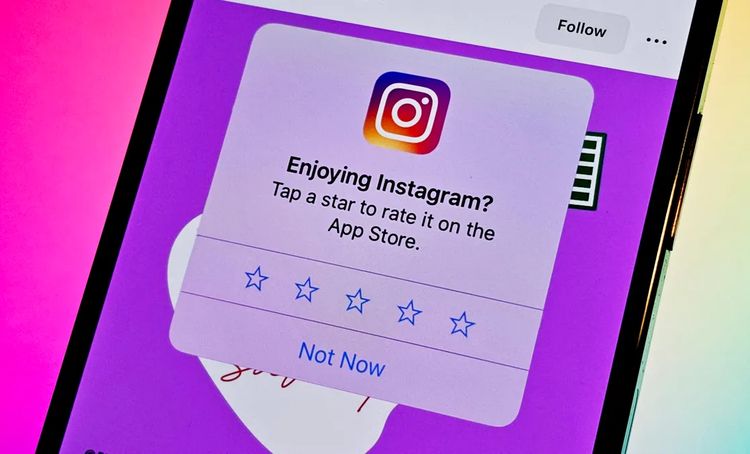
Users are far more likely to leave thoughtful, balanced feedback after completing a successful journey, when the experience is still fresh and the outcome has met (or exceeded) their expectations. By contrast, prompting for a review at a moment of friction can quickly backfire, reinforcing negative sentiment rather than balancing it.

There’s also an opportunity to be more deliberate in how and when these prompts appear. Segmenting users, identifying key milestones, and reducing the effort required to leave feedback can all contribute to a healthier flow of reviews over time.

For a deeper dive into the more tactical side of increasing review volume, we’ve already explored this in our 9 ways to increase app reviews, ratings & feedback guide. But the key here is less about tactics in isolation, and more about ensuring that the reviews you receive genuinely reflect the experience you’re aiming to deliver.


Reading between the lines

To get real value from app store reviews, it’s important to move beyond simply reading them and start interpreting what they’re actually telling you. Not all feedback carries the same weight, and without structure, it becomes difficult to separate meaningful insight from general noise.

One useful way to approach this is by categorising reviews based on what they’re really about. Some will relate directly to the product (things like usability, performance, or bugs) while others will focus on service elements such as delivery, support, or pricing. Then there are those that are more emotional in nature, where frustration is clear but the root cause is less defined.

Creating this distinction helps bring clarity in how feedback is acted on and where responsibility sits internally. It also makes it easier to identify patterns over time, which is where the real insight tends to emerge.

Of course, reviews are only one piece of the puzzle. When combined with analytics data, support tickets, and broader customer feedback metrics, they start to form a much more complete picture of the user experience.


How perception can shift over time

One of the more overlooked aspects of app store reviews is that they aren’t static. While individual reviews remain visible, overall perception evolves as new feedback is added and experiences change.

Updates, improvements, and new features all contribute to this shift, creating opportunities for more recent experiences to reshape how the app is perceived. But this doesn’t happen automatically. It requires consistent effort, both in improving the product and ensuring those improvements are reflected in the feedback being left.

In practice, this means focusing not just on what is being delivered, but on how users are encouraged to share their experiences once those changes are in place. Over time, this helps rebalance the narrative, allowing more current and relevant feedback to take precedence.


Reviews as part of your product strategy

When viewed in the right way, app store reviews become far more than a collection of comments. They act as signals that, when interpreted correctly, reveal how your product is performing, how your service is perceived, and where expectations aren’t being met.

But unlocking that value depends on context.

It requires an understanding that the app doesn’t exist in isolation, and that the feedback it receives is shaped by the entire experience surrounding it. By building review management into your product thinking - aligning teams, creating feedback loops, and responding with intention - you create a more accurate and actionable view of what users are actually telling you.


Final thought

App store reviews may sit within your product ecosystem, but they rarely stay confined to it. They reflect the full experience, capturing not just how the app performs, but how the business behind it delivers on its promises.

Left unmanaged, they can distort perception and lead to misguided decisions. But when approached with the right level of attention and understanding, they become something far more valuable, a window into the real user experience.

And ultimately, that’s where their true value lies.

If you’re starting to see that your app reviews are reflecting more than just the product itself, it’s worth taking a step back and looking at the full user experience behind them. We help teams understand what their app is really communicating in the market, and how to make sure reviews are working for the product rather than against it.

 
contact us

Apply theses insights

Contact us to discuss how we can apply theses insights to your project