Insight

Why intuitive onboarding can make or break your app

Why intuitive onboarding can make or break your app

Courtney Smith

Photo of Courtney Smith

Courtney Smith

digital marketing assistant

5 minutes

time to read

March 23, 2026

published

When someone downloads your app, they’re not signing up for a long-term commitment, they’re making a split-second decision. And in that instant, onboarding shapes the very first impression of your product.

It’s where expectations are set, value is revealed (or missed), and friction either disappears or becomes the reason users never return. For product owners building or scaling an app, this stage isn’t something you “layer in later.” It’s fundamental. If users don’t grasp your app quickly, they won’t stick around long enough to care.


The reality is, users don’t wait to be convinced

There’s a persistent assumption that if a product is strong enough, users will take the time to figure it out. In reality, the opposite is true.

These aren’t edge cases, they’re the reality for most products. Which means onboarding has to do more than create a strong first impression. It needs to actively reduce early drop-off and that shift changes how you approach design, moving the focus towards clarity, momentum, and removing friction from the very first interaction.


Onboarding is where value becomes real

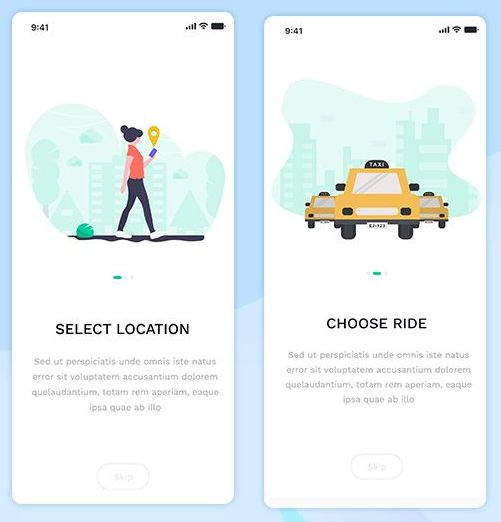
At its core, onboarding has one job: to help users reach their first meaningful moment as quickly as possible. Not a tour, not a list of features, not a brand introduction. A result. That “aha” moment where the app proves its worth. Where the user understands not just how it works, but why it’s useful to them specifically.

Strong onboarding compresses time-to-value and weak onboarding stretches it out, or blocks it entirely. This is where experienced mobile app developers tend to think differently. They’re not designing onboarding as a sequence of screens, they’re designing it as a journey towards a specific outcome.

Because until that outcome is reached, the product hasn’t really been experienced.


The hidden cost of overexplaining

One of the most common onboarding mistakes is trying to say too much, too early. Putting things immediately in the user's face, such as feature walkthroughs, tooltips, intro carousels and five-step explanations before the user even interacts.

It often comes from a good place, teams want to make things clear. But in practice, it creates friction. Users don’t need to understand everything upfront. They need just enough context to take the next step confidently. The more you front-load information, the more cognitive effort you introduce. And that’s where drop-off starts.

A better approach is progressive disclosure:

  • Show only what’s needed in the moment
  • Let users learn by doing
  • Introduce complexity as they move forward

The best onboarding experiences don’t feel like onboarding at all, they feel like immediate use.

app onboarding
 

Friction isn’t always obvious but it’s always felt

Not all onboarding failures are dramatic, most are subtle.

A slightly confusing screen. An unclear call to action. A form that asks for too much, too soon. Individually, these moments seem small but collectively, they create hesitation. And hesitation is where users disengage.

This is especially true in competitive markets like travel, where users are already familiar with alternative apps. If something feels even slightly harder than expected, they’ll switch. Intuitive onboarding removes those micro-frictions before users even notice them, and it anticipates uncertainty and designs it out.

It comes from understanding user behaviour deeply, something experienced mobile app developers prioritise early in the process, not after launch.


Personalisation is no longer optional

Users expect apps to feel relevant from the start. Generic onboarding flows (where every user sees the same experience) miss an opportunity to create immediate alignment. Instead, the most effective onboarding journeys adapt:

  • Asking lightweight questions to tailor the experience
  • Prioritising features based on user intent
  • Reducing irrelevant steps

This doesn’t need to be complex to be effective, even small signals can significantly improve engagement. According to research, personalised onboarding can increase retention by up to 50%.

The key is intent. Personalisation should reduce effort, not add to it.


Speed matters more than you think

Performance is part of onboarding. If the app is slow to load, slow to respond, or feels unpolished in those first interactions, users don’t separate that from the overall experience. It is the experience.

We found that 53% of mobile users abandon sites that take longer than 3 seconds to load.

While this stat refers to web, the expectation carries directly into mobile apps. Speed signals quality and delay signals risk. This is where technical decisions (such as frameworks, architecture, optimisation) quietly shape onboarding success. It’s another reason why onboarding shouldn’t be treated as a surface-level design exercise.


Measuring onboarding properly

If onboarding is this critical, it needs to be measured with the same rigour as any core feature. Key metrics to focus on:

  • Time to first key action (how quickly users reach value)
  • Onboarding completion rate
  • Drop-off points within the flow
  • Day 1, Day 7 retention

But numbers alone aren’t enough.

Qualitative insight (user testing, session recordings, feedback) reveals why users behave the way they do. And often, the biggest improvements come from small behavioural insights rather than large redesigns. Strong product teams treat onboarding as something to continuously refine, not something to ship once.


Why this stage defines long-term success

Onboarding is often underestimated because it sits at the very beginning of the journey. But that’s exactly why it carries so much weight.

It shapes:

  • First impressions
  • User confidence
  • Perceived value
  • Willingness to return

Get it right, and everything that follows becomes easier, such as engagement, retention, and monetisation. Get it wrong, and even the most well-built product struggles to recover.


Final thought

Intuitive onboarding goes beyond just simplifying your product, its real focus is on making the value clear to users from the very first interaction. That requires a balance of design, psychology, and technical execution, something that doesn’t happen by accident.

It’s shaped by teams who understand how users think, how products scale, and how small decisions compound into meaningful outcomes. And in a landscape where users are quick to leave and even quicker to compare, that first experience isn’t just important, it’s decisive.

 
contact us

Apply theses insights

Contact us to discuss how we can apply theses insights to your project